The Yarbrough National Genealogical & Historical Association Inc.
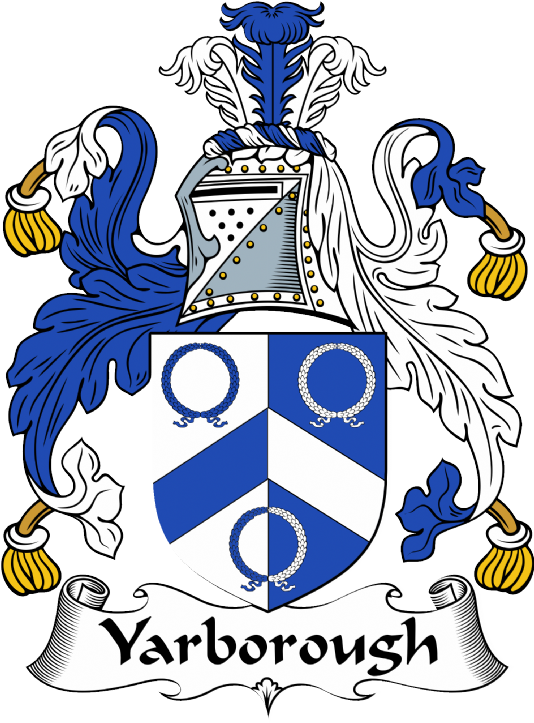
- Ancient Name Origins
Eorth-Burgh to Yarb(o)rough
Tracing more than 150 historical variations of the Yarb(o)rough surname across centuries of migration, language evolution, and historical recordkeeping.
- Historical Research
The Evolution Of A Historic Family Name
While the family name is most commonly recognized today as Yarborough or Yarbrough, historians and genealogical researchers have identified more than 150 historical variations of the surname throughout England and America.
The surname is believed to originate from the Old English word “eorðburg,” meaning earthworks or fortified ground, formed from the words “earth” and “fortress.” Similar linguistic roots also existed in Old Danish and Norse cultures, supporting the long-held belief that the earliest Yarb(o)rough ancestors descended from Danish settlers who arrived in Lincolnshire during the ninth century AD.
Over generations, migration, language shifts, regional dialects, and inconsistent recordkeeping transformed the surname into dozens of unique spellings, many of which still appear in historical archives today.
- Name Transformation
From Eorth-Burgh To Yarbrough
One of the earliest Old English forms connected to fortified earthworks and defensive settlements.
An early medieval variation influenced by regional pronunciation and evolving dialects.
A transitional Norse-English adaptation believed to have emerged during Danish settlement periods.
Yarborough Camp and nearby settlements remained historically recognized throughout Lincolnshire.
One of the most recognized historical spellings used throughout England and colonial America.
A modern simplified variation that became widely used across the southern United States.

- Lincolnshire Origins
Danish And Anglo-Saxon Roots
Yarb(o)rough and its many spelling variations are strongly associated with Lincolnshire, England. The surname likely developed as a habitational or topographic name connected to ancient fortified earthworks.
Researchers believe the earliest Yarbrough families were descendants of Danish raiders and settlers who established communities throughout eastern England during the mid-ninth century AD. The combination of Old English and Norse linguistic influences explains the many early forms of the surname found throughout medieval records.
The family name became deeply rooted within Lincolnshire and surrounding regions, where historical documents, church records, and land references continued to preserve its evolving spellings for centuries.
- Historic Landmark
Yarborough Camp And Ancient Fortifications
Yarborough Camp, an ancient hill fort hidden within woodland landscapes, remains one of the most significant historical locations associated with the family name.
Though the exact date of the fortification remains uncertain, historians believe it predates the Anglo-Saxon era and may have served as a strategic military position during early territorial conflicts. Its Old English name suggests the site was already recognized as an established fortification during Anglo-Saxon times.
The camp later gave its name to the Yarborough Wapentake and likely functioned as an important gathering and defensive point within the region. Today, the site continues to symbolize the deep historical roots connected to the Yarb(o)rough name.
- Genealogical Challenges
Why Did The Name Change So Often?
Limited Education
Before the early twentieth century, many individuals could not consistently read or write their own surnames.
Phonetic Spellings
Clerks and scribes often recorded names exactly as they sounded when spoken aloud.
Multiple Languages
Historical church and parish records were maintained in Latin, Spanish, Portuguese, French, and English.
Difficult Handwriting
Old handwritten documents frequently caused transcription mistakes and alternate interpretations.
Migration Across Regions
As families moved between England and America, pronunciation and spelling naturally evolved.
Inconsistent Record Keeping
Early census records, legal documents, and church archives were often created without standardized spelling rules, resulting in many surname variations across generations.
- Surname Variations
Historical Variations Of The Yarb(o)rough Name
Common English Variations
- Yarborough
- Yarbrough
- Yarber
- Yarbro
- Yarboro
- Yarberry
- Yarburg
- Yarburgh
- Yerburgh
- Yerbrough
Regional / Phonetic Variations
- Yarbora
- Yarbourgh
- Yarborow
- Yarbrow
- Yarbry
- Yarbury
- Yorborough
- Yorbro
- Yurbrough
- Yearborough
Rare Historical Variations
- Yarbora
- Yarbourgh
- Yarborow
- Yarbrow
- Yarbry
- Yarbury
- Yorborough
- Yorbro
- Yurbrough
- Yearborough
Early Historical Forms
- Eorth-Burgh
- Gereburg
- Jardeburg
- Yardeburgh
- Yerdeburgh
- Zerburgh
Guidance For Family Researchers
Genealogists researching the Yarb(o)rough family are encouraged to explore historical documents using multiple spelling variations. Census records, immigration documents, military records, church archives, land grants, and handwritten manuscripts often contain alternate forms of the surname.
Successful research frequently depends on recognizing phonetic spellings and understanding how regional accents, education levels, and translation practices influenced written records throughout history.
The evolution of the surname reflects not only linguistic change, but also the migration and resilience of generations who carried the family name across England and America.
Preserving The Yarb(o)rough Legacy
Through historical preservation, archival research, and genealogical collaboration, the story of the Yarb(o)rough family continues to connect generations across centuries.
- Common Questions
Frequently Asked Questions
What does Eorth-Burgh mean?
The term originates from Old English and refers to earthworks or fortified ground.
Why are there so many Yarbrough spellings?
Limited literacy, phonetic spelling, migration, and multilingual records all contributed to surname variations.
Did the family originate in England?
Are Yerburgh and Yarbrough connected?
Many historians believe several related surname forms share common ancestral origins.
Should researchers search only one spelling?
No. Genealogists are strongly encouraged to explore multiple spelling variations when reviewing historical records.
How many variations of the Yarb(o)rough surname exist?
Researchers have documented more than 150 historical spelling variations of the surname across England and America.
What is the oldest known form of the name?
One of the earliest recorded forms is believed to be “Eorth-Burgh,” derived from Old English words connected to earthworks and fortifications.
Why do historical records show different spellings for the same person?
Before modern spelling standards existed, names were often written phonetically by clerks, priests, and census takers.
Is Yarborough Camp connected to the family name?
Yes. Yarborough Camp is an ancient hill fort in Lincolnshire associated with the historical origins of the surname.
Did migration influence surname changes?
Yes. As families moved across regions and countries, accents, dialects, and local recordkeeping practices influenced how the surname was written.